What a house rewire involves
A full rewire replaces the cables, accessories and protective devices that carry power around your home. We strip out tired wiring, install new circuits sized for how you live today, fit new sockets, switches and light points where you actually need them, and finish with a modern consumer unit. Most three-bedroom homes in the North West take between five and eight working days, depending on access and the extent of making good.
Who it's for
Rewires suit homeowners renovating an older property, buyers who have received a poor survey or EICR, landlords bringing a rental up to standard and developers converting or refurbishing houses for sale. Many of the terraced and semi-detached homes across Lancashire and Greater Manchester still contain rubber or early PVC cabling that has long passed its design life.
When you need one
If your wiring is more than 25 to 30 years old, if your EICR is coded unsatisfactory, or if you are planning a new kitchen, extension or loft conversion, a rewire is often the most cost-effective route. Doing it before plastering and decorating saves money and mess later.
Our process
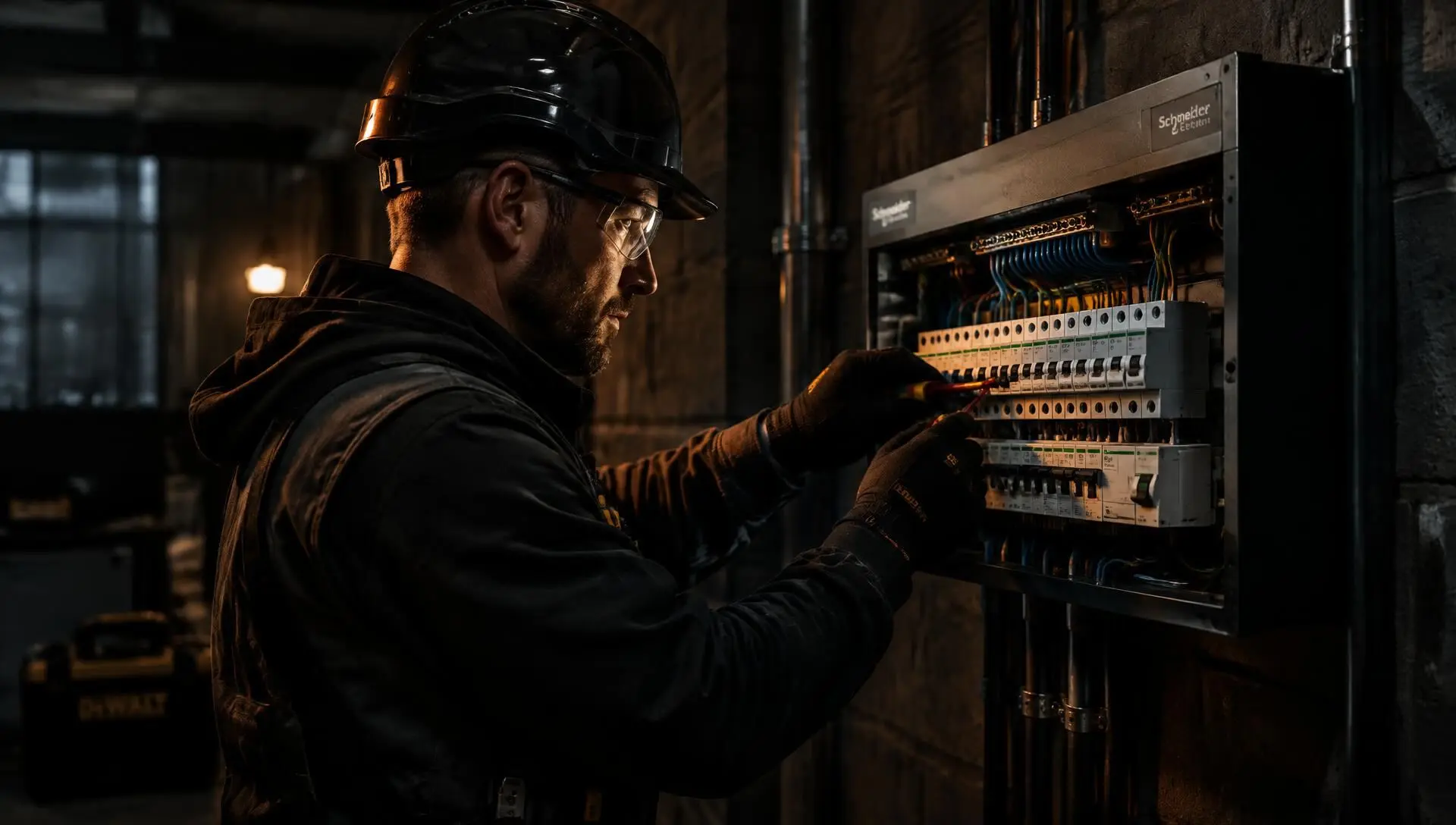
We survey the property, agree the layout of sockets, lighting and data points with you, then carry out a first fix while floors and walls are open. After plastering we return for second fix, install the consumer unit and test every circuit. Where we can, we keep one circuit live so you can stay in your home during the work.
Safety and compliance
Every rewire is designed, installed and tested to BS 7671, the current IET Wiring Regulations. As a NAPIT registered contractor we notify the work to building control on your behalf, and you receive an Electrical Installation Certificate plus the NAPIT building regulations compliance certificate on completion.